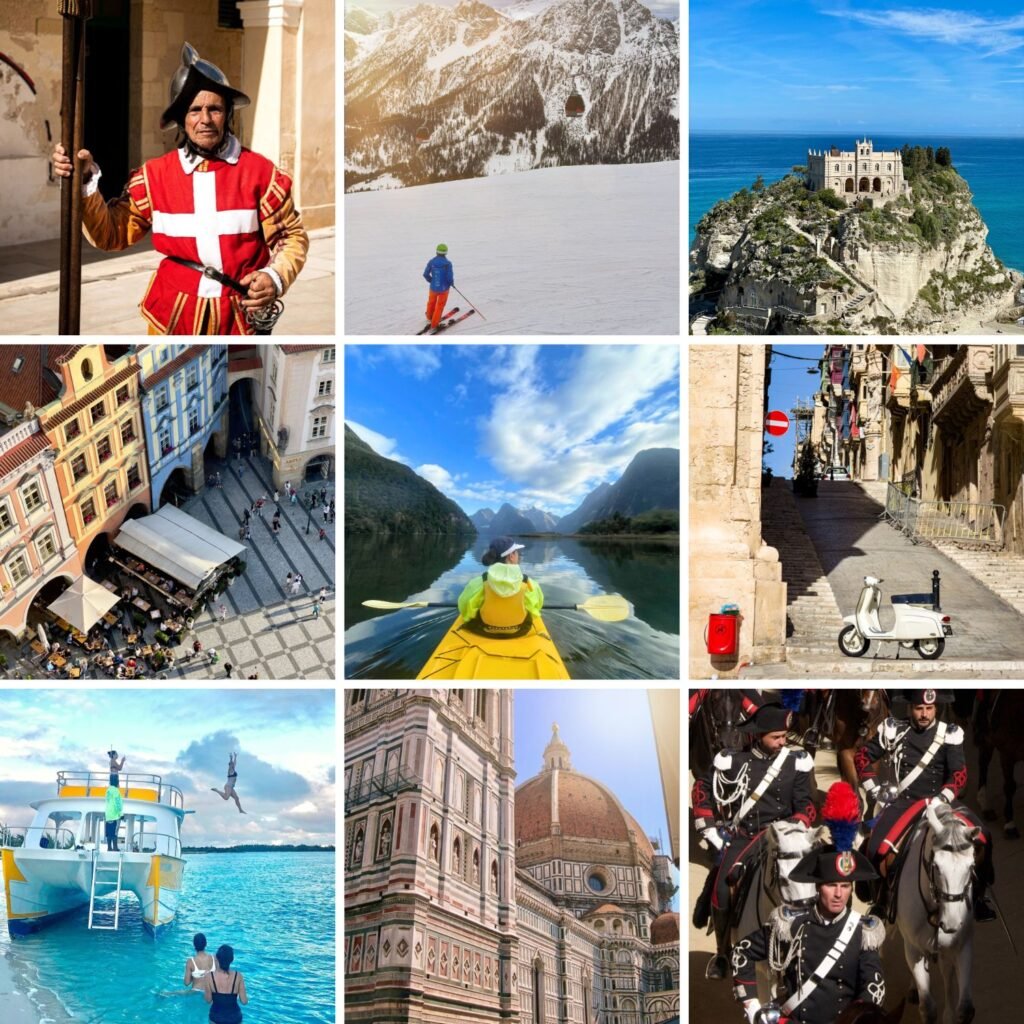
Podcast: Wherever We May Roam — Travels With Jim and Rita
Hosts: Jim Santos and Rita Santos
Release Date: September 9, 2026
Listen on: Apple Podcasts
Full Episode Transcript:
[00:00] Jim Santos: Have you ever returned from a trip feeling completely worn out? Well, maybe we can help. Today we’re talking to someone who can help you change the way you travel. Welcome to Wherever We May Roam, the new face of Travels With Jim and Rita. This podcast is about discovering your own travel style to explore the world. I’m Jim Santos, and along with my wife Rita, we spent more than 16 years traveling, sometimes for a few weeks, sometimes for a few months, and sometimes a whole lot longer.
[00:36] Jim Santos: And what we’ve learned is this, there’s no right or wrong way to travel. Some people take extended getaways, some roam part-time, some work from the road, and some make travel a full-time lifestyle. This podcast is about helping you figure out what works for you, and how to make it happen in the real world. So whether you’re planning your next trip, or thinking about something bigger, we’re glad you’re here. Let’s get started. Welcome, everybody. I’m Jim Santos, joined by my wife and travel companion Rita, and this is Wherever We May Roam.
[01:10] Jim Santos: Our guest today is Paul Partridge. Paul spent years as a financial advisor and retirement planner. He’s also a travel writer and photographer whose work has appeared in the Washington Post, Forbes.com, and International Living. Somehow those two worlds collided, and today he runs a company called Travel Villa Guide, which helps families and close friends plan trips centered around what he calls The Gift of Time Together. We’re going to talk about travel today and about something bigger, about legacy, about inheritance, and why, for a lot of people, the most meaningful thing they can leave their family has nothing to do with money.
[01:46] Jim Santos: Paul, welcome to Wherever We May Roam.
[01:48] Paul Partridge: Thanks, Jim and Rita. I appreciate being here.
[01:51] Jim Santos: Paul, you have a pretty unusual background, a financial advisor and now a travel writer and photographer. How did those two worlds collide?
[01:59] Paul Partridge: Yes, you’re right. It’s pretty unusual. I guess I would explain it maybe a roundabout way to say that the older we get, the harder it becomes to get the people we love together in the same place at the same time. Kids grow up, they move away, parents get older, close friends get caught up in their own little world and getting everyone together just becomes harder every year. Somewhere along the way, I realized the best trips aren’t just where you go, but it’s about bringing the people that you love close together.
[02:40] Paul Partridge: That’s why I started Travel Villa Guide specifically to help families and close friends. People like me, honestly, to create extraordinary vacations that celebrate life’s important moments. Family reunions or multi-generational trips, milestone birthdays, anniversaries, those kind of things, just believing that these kind of moments deserve more than ordinary vacation. They deserve more than going to the restaurant.
[03:12] Rita Santos: You know, I used to go with, I have three older brothers and they were all married and had children and we used to rent big houses at ski resorts and spend every Christmas. And then it seemed like after our parents passed away, we’ve moved along to different things, but yes, those were very wonderful trips.
[03:33] Paul Partridge: Yeah, they kind of live on too, don’t they, Rita?
[03:36] Rita Santos: They do, yes.
[03:38] Jim Santos: There must have been a point along there where you’re a financial advisor, was there a particular trip that you took or you and your family took that made you kind of bend into this direction?
[03:49] Paul Partridge: You know, there were a couple of, we’ve been doing it, to be honest, Jim, our family has been doing these kind of trips for about 25 years, maybe a little bit longer. But we try to do one family, extended family trip every year, at least one. I remember the first one that we did was with my parents and siblings and the kids, you know, a three generation trip and we went to, you’re not going to be surprised by this, but we went to Disney World.
[04:19] Paul Partridge: Yeah. And we rented a house, it was the first time that we had ever done that, and that was a revelation. But you know what, it was just having everybody together, you know, I remember and we still laugh about this. My daughter, my youngest daughter, my dad was holding her in, I think it was what do you call it, Frontierland. And, you know, we just got there, we just kind of made our way through the park, we sat down, he put her on his lap and she immediately threw up on him.
[04:55] Rita Santos: Welcome to parenthood.
[04:58] Paul Partridge: Exactly. And then my other daughter, who was a little bit older, she ran into Captain Hook about five minutes later and absolutely had a meltdown. And despite, you know, despite that, you know, it’s still one of the trips that, you know, we laugh about and talk about. So that was like the first eye-opening thing was that trip and then, like I said, we’ve been doing it for 25 years. And kind of, that’s kind of what launched the thing because, you know, friends and people I would meet through work or whatever.
[05:29] Paul Partridge: I would tell, talk about the trip and they say, oh man, can you do that for us? Because that sounds amazing. So that’s kind of how the whole thing started.
[05:38] Jim Santos: Well, let me ask you this. My first wife and I planned a trip once to France and we rented a house and her brother and his wife and some kids came with us. So there were like eight of us all there in this house in France. But we really only saw each other when we were in that house. We went with the kids one place. He and his girlfriend went to another place and his kids were older.
[06:04] Jim Santos: They hopped on a train and went to Amsterdam so they could try out the hash bars.
[06:08] Rita Santos: Don’t you love kids?
[06:09] Jim Santos: So how do you handle this when the same group of people may want completely different things and be in completely different places?
[06:17] Paul Partridge: Yeah, you know, that’s a great question and to be honest, it’s a question that I kind of struggled with for years. You know, how do you do one trip that makes, well, we have a little bit bigger crowd than we go. So, you know, how do you plan one trip that makes 12 or 15 people happy, right? And eventually over the years I came up with something that we now call travel type matching. What we found is that people naturally lean toward one of four travel types and I’ll explain them to you.
[06:47] Paul Partridge: One we call the immersers. They’re the type of folks. They want to understand the place inside and out. You know, they get up for the guides. You know, they read every museum plaque. They read every message in the [unclear word]. They have one more question while everybody else is wondering, hey, what’s for lunch? They want to stick around and talk to the guide for another hour. Right, so we call them the immersers and we have several of them in our family.
[07:15] Paul Partridge: My wife is one of them. And then the next kind of category is called the adventurers. Those folks come alive through activity, you know, if they’re not biking or climbing or kayaking or trying to, you know, hike to the best view, they start to get restless. So that’s the adventurers. The next is the experiencers. They rely more on their senses. You know, they want to see it, taste it, smell it, and experience it for themselves. And they’re the ones who kind of wander off and then they come back later with a local fisherman who’s been invited to dinner.
[07:50] Jim Santos: That’s kind of us.
[07:52] [Uncertain speaker]: That is me.
[07:55] Paul Partridge: I’m glad to see that we’re on the same boat. We are experiencers and that is me to a T. The last one is called relaxers. You know, they find the perfect chair by the pool on day one. And you can find them in the exact same spot on day seven. And they’re completely happy. You know, generally when I talk about these different types, people kind of say, oh, you know, that’s dad or that’s that’s Aunt Lois or whatever, right?
[08:23] Paul Partridge: They can kind of they recognize these things. But, you know, the reality is that in any group, you’re going to probably have all four travel types.
[08:31] Rita Santos: Right.
[08:32] Paul Partridge: And the way that we kind of work things is we try to find out who are those types before you leave. And then we try to give each type, you know, something they’re excited about. You know, we let them have their space to do those things. And then we work at gathering everyone together for the moments that matter, you know. So that could be, you know, we’re going to eat dinner together every day. Or we’re going to eat breakfast together.
[09:00] Paul Partridge: Just something that brings everybody together to remind us that, hey, we’re on this thing together. The purpose of the trip is to be together. And we can all go do our things and be happy and find our happy place. But let’s come back and share, right?
[09:17] Jim Santos: So it sounds like a lot of work goes into this before you even get on the plane. Stay with us. We’ll be right back. Hey, it’s Jim. Quick confession. For years, I’ve been selling my books on Amazon and watching most of the money disappear into printing fees and their cut. About 20% to me, 80% to Amazon. So I open my own store. Now you can get PDF copies of 11 of my books and short stories directly from me at shop.jimsantosbooks.com for less than the paperback price.
[09:50] Jim Santos: And they’re in full color, so all those travel photos actually look like photos, not gray smudges. Pick your books, check out with a card or PayPal, and you’ll get a download link in minutes. Read it in any PDF viewer or send it straight to your Kindle. That’s shop.jimsantosbooks.com. Help a starving artist and save some money. Everybody wins.
[10:13] Paul Partridge: Yeah, and even, honestly, Jim, even before we figure out what’s the best destination.
[10:20] Jim Santos: Well, can you walk us through that? How do you go about as somebody approaches you and says, hey, we want to plan a get together for our family, say, 12 people?
[10:28] Paul Partridge: So the first thing we’re going to do is we’re going to say, who’s coming? So we want to start with the, we want to start with the people, not the place. Obviously, everybody has in mind, you know, an idea of where you want to go. So, you know, extremely important. I don’t want to discount that. But we have to know who’s coming and what’s the purpose of the trip? Because a trip that’s for, say, eight people who went to college together 20 years ago and now they’re getting together is very different from we’re celebrating grandma’s 85th birthday.
[11:03] Paul Partridge: You know, we want to know the purpose of the trip and what is the, you know, what’s the vibe and what do we, what’s the number one thing we want to get out of it? Who’s coming? And then we can get around to, all right, now let’s talk about the destination. We talk about what kind of place you’re going to stay in. And then we figure out how do we put an experience against, you know, each of the different travel types that we mentioned.
[11:27] Paul Partridge: Right. So that, you know, so everybody has a good time. And, you know, a lot of times, you know, I don’t know about you, but my friends come home from vacation. I say, how was it? And, you know, the first thing they say is, oh, my God, I need a vacation for my vacation.
[11:43] Rita Santos: Yes.
[11:43] Jim Santos: Yeah, I’ve been there. There were times when I was working that it was a relief to get back to work.
[11:48] Paul Partridge: Yeah. And I think, you know, when that happens and, you know, I kept hearing it more and more. And, you know, so I’ve thought quite a lot about that. And what I’ve concluded is that it comes down to like, there’s something off about the trip if you’re coming home more exhausted than when you left.
[12:03] Jim Santos: You know, trying to do too many things.
[12:06] Paul Partridge: Yeah, it could be as simple as that. Yeah, it could be as simple as that. Or it could be like, you know, there’s some misalignment. So to the adventurer, you know, getting up and jumping on a bike before breakfast and you ride for 20 miles, that’s exhilarating to somebody who was not an adventurer if they’re the relaxer and they’re made to do that because, you know, hey, we’re all going to do this together. They find that extremely exhausting, right?
[12:34] Paul Partridge: Just like the same thing is if you, you know, if you’re the type of person that, you know, wants to do three museums before 12 noon, you know, somebody else likes to just get up gradually and stretch and have their coffee. And if you put them on your schedule, you know, one of the two of you is going to not be very happy and probably exhausted.
[12:54] Rita Santos: Right.
[12:54] Paul Partridge: So I think that’s kind of how it gets to that. And that’s why we try to figure out, you know, how best do we balance it so that people are going to be exhilarated by what they do. And they’re going to come home refreshed. And we always say our goal is to have everybody come home closer than when they left.
[13:11] Jim Santos: Now the cost of renting those homes, larger places, has changed a lot since the time that Rita was talking about.
[13:18] Rita Santos: Wow. It was pretty expensive for the house.
[13:21] Jim Santos: Is there a threshold of the number of travelers you need to make it economically feasible to rent a house or a villa and travel like this?
[13:29] Paul Partridge: Yeah. I think, you know, it varies by what, you know, what people are comfortable spending. But I would say for us kind of the minimum threshold is six. I think is probably the smallest, but usually it’s more than that. You know, usually it’s eight or above. But I think six is the minimum because if you start to do the arithmetic, you know, a lot of people have this notion of, oh my gosh, villas and private homes are so expensive.
[13:58] Paul Partridge: But, and they can be, but you know, what I found Rita is that when they’re saying that, you know, I always say, well, you know, compared to what. So if you’re, you’re staying, you like to stay in nice hotels, right? It doesn’t have to be, you know, five-star superstar hotel. But let’s say you like to stay in a four star, you know, four-star or above hotel. And that’s, that’s kind of what you used to. You have, let’s say 10 people going, right?
[14:23] Paul Partridge: Depending on how it breaks down with families and stuff, you could need five or more rooms.
[14:28] [Uncertain speaker]: Exactly.
[14:29] Paul Partridge: You know, if you’re, again, it all depends on where you’re going. If you go, but if you’re going, a lot of our trips are to Europe. So if you’re going to go to a nice place and, and you’re going to go in, yep, be going in the summertime and you’re in a four star hotel, you know, you’re going to be paying, I don’t know, five, six hundred dollars a night for the room. Yeah. And if you multiply that by five, if you do have five rooms, you know, you’re looking at twenty five hundred, three thousand dollars a night in just accommodation costs.
[15:00] Paul Partridge: And boy, you can get a lot of nice villas for that.
[15:03] [Uncertain speaker]: Oh, yeah. Yeah. Yeah. Yeah.
[15:06] Paul Partridge: And the difference is that, you know, you have the space to be together when you want and to, to, you know, retreat when you want as well. Everybody has their own rooms and stuff, but you have, you have your own kitchen. You have your own pool. You don’t have to fight for lounge chairs around the pool. You get to have coffee together in the morning. You get to have sit around the pool in the afternoon. You get to eat together at night.
[15:29] Paul Partridge: You know, it’s, it’s a much more. I think space is very, it’s very under appreciated.
[15:36] Rita Santos: I agree. Yeah. Yeah. We always, we usually get some kind of an apartment or a condo or wherever we go.
[15:45] Jim Santos: It’s even been a house sometimes.
[15:46] Rita Santos: Yeah. In Ireland, that was lots of times houses because, yeah, we enjoy that, even though it’s just the two of us.
[15:54] Jim Santos: Yeah. The extra room really makes it, I mean, just having a comfortable chair to sit in.
[15:57] Rita Santos: Yes.
[15:58] Jim Santos: Yeah. A lot of the times in hotels, you may have one chair or two chairs and they’re not very comfortable.
[16:04] Rita Santos: Yeah.
[16:05] Paul Partridge: Yeah. Yeah, there’s a certain sort of, I mean, don’t get me wrong, I love hotels.
[16:09] [Uncertain speaker]: We do too.
[16:10] Paul Partridge: But, you know, not in a group. To be that claustrophobic thing where you only have your, that little space where it’s a bed and maybe a desk and that’s it is vastly different than just having like, you know, a kitchen and a place to sit and a place to go outside. And yeah, it’s just, it’s just a different experience. So I would say even if it was the same price, just the difference in experience, you know, to me makes it hands down.
[16:38] Paul Partridge: If you’re in a group, you really, hotels kind of separate you. That’s the other thing is, you know, you’re on different floors, you’re in different rooms, right? Yeah. You just, you try to gather the group just to have dinner and it’s, you know, you need a camp counselor to like.
[16:51] [Uncertain speaker]: It’s a challenge.
[16:52] Paul Partridge: Yeah. Right.
[16:53] [Uncertain speaker]: Everybody’s on their phones. Where’s Jimmy? Yeah. Oh, God. Wait. Wait. [Unclear short question.]
[16:58] Rita Santos: Hold on.
[16:59] Jim Santos: Yeah. There’s cost and then there’s value.
[17:01] Rita Santos: Yeah. And that’s what we look at. How much is the value going to cost us?
[17:06] Paul Partridge: Yeah. I remember you, one of your shows, I remember, I mean, you were talking about, I guess in Ireland, you had, you had a problem with a, with a place you showed up. It wasn’t great. And you were saying, well, we’re going to have to pay a lot more, but man, it’s just worth it.
[17:19] Jim Santos: Yeah. That was something I wanted to ask you about. Because, you know, as you know, we’re no strangers to booking with Airbnb and booking.com. But like this place in Scotland, sometimes we found the description doesn’t really match the location, but looking at your website, it seems like you’ve kind of like pre-screened or pre-selected the places that you’re getting people into. Okay. Tell us a little bit about that. How do you meet these people?
[17:41] Jim Santos: How do you set this up?
[17:42] Paul Partridge: So our trips, we’re trying to give people their own private world where, you know, for one week or two week, you know, the rest of the normal, hectic life fades into the background.
[17:56] [Uncertain speaker]: That’s great.
[17:57] Paul Partridge: And you’re just, you know, you’re just ensconced or sometimes I say cocooned in your own little private world. What we want to do is we want to protect that and we protect that in a couple different ways. One is that we provide all the houses have concierge support. We can talk about that in a little bit. But to answer this question, you know, before we’re not going to recommend a home, they’ve all been vetted and they’ve all been inspected.
[18:24] Paul Partridge: And certainly, I mean, I’ve rented my share of Airbnb and VRBO places as well. But it’s always that sense of, you know, when you open the door, especially if you have other people that you’re responsible for, you kind of open it with one eye open, you kind of like, it’s like a box of chocolates. Right. Yeah. [Unclear phrase.] I mean, I, I even read, you know, a few months ago, I remember I was reading, I was reading Travel + Leisure and the CEO of Airbnb was being interviewed and they asked him, what’s the, you know, number one problem?
[18:58] Paul Partridge: He said the number one problem. I was surprised. He said this, actually, but he said the number one problem is, is people saying this isn’t what I expected. So I feel that and, you know, if I’m going to send 15 people, you know, to Tuscany or something, I want to make sure that the place has been vetted and inspected before they get there. And that’s, so that’s what we do. Like I said, we have local concierge support to, you know, also be there to make sure everything’s great.
[19:25] Paul Partridge: And if anything comes up, look, you know, things do come up and, you know, the difference between being happy and being unhappy is do they get fixed right away?
[19:36] Rita Santos: Yeah, exactly. Right.
[19:38] Paul Partridge: If you’re in Greece and you don’t speak Greek and you show up at your place on, you know, Friday afternoon or you’ve flown all night and you get there exhausted and no hot water. Yeah. Well, I was going to say, you know, these days, you know, it could be 105 degrees and whatever the air conditioning doesn’t work. Yeah.
[19:58] [Uncertain speaker]: We have that. Folks. So, yeah.
[20:01] Paul Partridge: So if you don’t, I mean, if you don’t speak the language, it’s even, it’s even scarier because, you know, the owner of the Airbnb, that person, he or she could live in Istanbul or London or New York, [unclear phrase], you know, you have to try to find them. Like first you have to find them. Yeah. And then you have to tell them the problem and then, okay, now they have to try to fix it from New York and you’re in Santorini.
[20:29] Paul Partridge: They’re not going to find somebody to, well, first of all, you’re not going to get anyone in Greece to come on a weekend. Right. And, you know, you’re going to be, it’ll be Monday or Tuesday before anybody even shows up at the house. Yeah. And now you’ve lived four days and 105 degrees. Everybody’s miserable.
[20:46] Rita Santos: Oh, God.
[20:47] Paul Partridge: They’re all looking at you saying, why’d you pick this place?
[20:49] Rita Santos: Right.
[20:50] Paul Partridge: And so we just like it to have it where you can have someone to say, you know, Julie, the air conditioning doesn’t seem to be working. Could you take care of that? We’re going to the beach. Yeah. That’s a much, that’s a much nicer sentence than what are we going to do?
[21:04] Rita Santos: We’ve actually only had two stinkers, though, right, hon?
[21:07] Jim Santos: Yeah. And with that air conditioning problem, we had to, we had to stay in the unit until somebody came out because we had to be there to let them in. Yeah. And to be there while they were working. So it wasn’t, we’ll go to the beach. It was, well, we’ll be here sweating.
[21:20] Paul Partridge: Yeah. Yeah. No, that’s what I was saying is that what, you know, when you had to go to the beach, you have the concierge support there, you can go to the beach. You don’t have to wait for the air-conditioning guy to show up. Right. So that’s, that’s just one of the ways we, you know, we’re trying to protect that, we’re trying to create this little private world. And then we’re trying to protect it to make sure that it, you know, it’s, it’s the way that you want it.
[21:43] Paul Partridge: Yeah.
[21:43] Jim Santos: Yeah. Well, you know, another source of anxiety for, for travelers, especially new travelers, is when you first show up at the airport and you don’t speak the language, getting transportation from the airport to your accommodations can sometimes be a little stressful. Do you help with that also?
[22:00] Paul Partridge: Yeah. We’re going to make sure that that’s all arranged beforehand. If that’s what someone wants, you know, some people are inveterate travelers and they say, Oh, no, no, we, we don’t. We’re good. Now, the one thing we don’t do, you know, is we don’t handle the flights. Mm hmm.
[22:16] Jim Santos: That could be a nightmare.
[22:17] Paul Partridge: Yeah. That’s a nightmare. And, you know, people are coming from everywhere and their schedules change and stuff. So we just say, look, from the time you land on the ground, we got it from there and then, you know, we’ll get you, take care of everything and then we’ll put you on a plane to go home. But the plane part is, isn’t anything that we do, but everything else we, yeah, we do. We make sure that, that people don’t have that panic moment of, Oh my gosh, I don’t even know where, I don’t even know where we’re supposed to meet somebody or where’s, where’s the, where’s the bus?
[22:49] Paul Partridge: Where’s the taxi?
[22:50] Rita Santos: So, yeah, some people just freak out about that. We just pivot. We just work it out. It’s no biggie. Yeah.
[22:57] Paul Partridge: Well, part of it is, you know, Rita, I think it’s partly like how long you have to be there too, right?
[23:03] Rita Santos: I agree.
[23:05] Paul Partridge: If you go in somewhere and you know you’re going to be there for a month or two months or something, you’re much more relaxed.
[23:10] [Uncertain speaker]: [Unclear short reply.] Yeah.
[23:12] Paul Partridge: We only have a week or you only have 10 days or so much like, hey, every minute counts, you know. Yeah. We’re going to get to the house.
[23:19] Rita Santos: Yeah.
[23:20] Jim Santos: Now, do you typically work with just one group member or is the kind of thing where everybody gets a vote on what they’re doing or gets at least a say on it?
[23:29] Paul Partridge: Generally, there’s one point person, but we don’t plan around one, one point person’s vacation or trip. So we go out of our way, you know, with the travel type match and we’re enthusiastically asking about the other members because that’s going to make or break it. But we want to, you know, we tend to deal with one person. We’re not going to deal with 15 people, but we’ll deal with one, but we encourage, you know, this is a group trip and they should have group input.
[24:00] Paul Partridge: I remember one was a destination wedding that a gentleman had come to us and asked us to work out. It was in Italy and we had a couple of conversations with him and we were starting the planning process. And it seemed like every time I asked questions about, you know, what does the, what does mom think? What does the, what does the bride to be think? What does your son think? He was planning it for his son.
[24:25] Paul Partridge: You know, the answer was always, oh, it doesn’t matter. I’m paying for it. So they’re going to do it my way. Oh, you know, and that’s a disaster. It’s going to be a disaster. I actually, I said, you know what, I don’t know that I’m the best for this trip. So I think, I think we’re going to pass. Yeah. Yeah. Yeah. Cause it, yeah, that was going to be a disaster.
[24:49] Rita Santos: Yeah. It only takes one customer to be dissatisfied and spread it all over the world.
[24:55] Paul Partridge: Yeah. Yeah. So, you know, we plan group trips. We want the group to be happy. We don’t. That’s not just one person, right?
[25:03] Jim Santos: Yeah. Do you have a lot of difficulty with teenagers? I know we took our son to France once and he walked through the Louvre with his head down looking at his feet the whole time. Yeah. You know, the kids get to this certain age where they’re rebelling against everything. Oh, yeah. Has that ever come up on your trips?
[25:21] Paul Partridge: Fortunately, I’ve been on the planet long enough, Jim, to kind of have seen all these things. Yeah. Yeah. Right. So I, that’s why, you know, I spend the whole first conversation trying to find out who the, who the folks are that are coming. Mm hmm. And I, you know, because I’ve seen this, I get to explore it. But you know, if you do, again, if you set it up correctly, we’re trying to set, you know, have those things that, okay, this young man is maybe not going to be interested in the Louvre.
[25:54] Paul Partridge: So do you intend to drag him or her around or are you open to them doing something else? So depending on the answer to that, you know, we can make, make the proper arrangement. But we’re trying to, we’re trying to nip that in the bud because, you know, the whole, again, the whole purpose of this is like we want you coming home closer than when you left.
[26:17] Rita Santos: Right.
[26:18] Paul Partridge: You know, it’s not to put up fences or have anybody be, you know, excluded, resentful, you know, they had to go here or there. And also, you know, the other part of it is like, if you know the Louvre, like, well, maybe you don’t want to see, you know, this painting or that painting, but there are a lot of things in the Louvre that might be interesting to a 13 year old. Mm hmm.
[26:39] Jim Santos: Well, he’s since grown up and took his daughter to France and she was a major pain in the ass. So I feel vindicated by that.
[26:46] Paul Partridge: Yeah. Yes. Yes. Fair play.
[26:50] Jim Santos: It may be petty, but I feel good about it.
[26:54] Paul Partridge: That’s good.
[26:56] Jim Santos: Now, what do you think are some of the biggest mistakes that people make when they’re planning a family or a friend’s reunion or especially a multi-generational trip?
[27:04] Paul Partridge: I think the first one is, you know, kind of one that we spoke about already, which is like every, you know, everybody starts with the destination, right? They’re all focused, hyper focused on where they’re going. You know, before the destination, it’s all these other questions, you know, is this, you know, is this the first time the family’s been together in years, right? Are you celebrating a birthday? Is this the trip where the grandkids are, you know, meeting their first cousins for the first time or so it’s to get that stuff down first.
[27:35] Paul Partridge: I think that’s the first mistake is starting with the destination as opposed to the people and in the purpose. I think, you know, another one is not getting everyone on the same page early schedule wise. I just, this one’s on top of mind because we were planning a trip for a family, you know, we had asked all the questions and we were narrowing in on the destinations and we started to go down to the point where, you know, starting to pick out homes and stuff.
[28:05] Paul Partridge: It turned out that, you know, two of the kids actually couldn’t come.
[28:09] Rita Santos: Oh gosh.
[28:11] Paul Partridge: That’s something that I would say, you know, make sure everyone’s on the same page, you know, schedule wise. Yeah. Those are the biggest problems.
[28:20] Rita Santos: Yeah. Especially if you have adult children.
[28:24] Paul Partridge: Having those ducks in a row first is really, is really paramount. Otherwise, I mean, you can go around and around on these things, you know, and, you know, that’s why we like to have one person who has a little bit of authority where they can kind of push the conversation along. Yeah. We have a list, like a checklist of things. All right. Can we check off these boxes before we move to the next step?
[28:47] Jim Santos: Yeah. Yeah. Rita and I had families of our own when we met and when we went to get married, we decided it would be great to do a Disney cruise
[28:56] Rita Santos: Or a destination wedding
[28:57] Jim Santos: And invite everybody along and they could come on the cruise and, you know, those kids and the grandkids
[29:01] Rita Santos: And because they all had little ones
[29:03] Jim Santos: And everybody had a conflict with this or with that. And we finally just got married at the justice of the peace.
[29:08] Rita Santos: Yeah. Yeah. And went to Ecuador. Yeah. We went to Ecuador by ourselves. Okay. Come see us when you want.
[29:16] Jim Santos: Yeah. So I can see where your service would be really valuable to people who are trying to put something together like that. Now, on your website, you mentioned three aha moments in your life about travel. Is there one that you’d like our listeners to take away from this conversation?
[29:31] Paul Partridge: There’s a couple things to say. It goes back to my financial advisor days. You know, I spent a lot of our time answering the big questions, you know, like, you know, what’s important and what are the assets, right? And what’s the legacy and what are we going to pass on? I think that there’s a lot of a lot of that thinking can be brought over to traveling. You know, there’s another kind of, I guess, to keep it in terms of the, you know, financial planning.
[30:02] Paul Partridge: There’s another kind of wealth, really. To me, what I’ve discovered to me is beyond money, beyond tangible things, what is it? You know, it’s having adult children who still want to take vacations together. It’s having grandchildren who actually know their grandparents. It’s friends who, you know, you’ve shared decades of life with that you still want to make time for. And those things don’t just happen. They have to be invested in and traveling together is an investment in the people that you love.
[30:37] Jim Santos: So this is that gift of time together.
[30:39] Paul Partridge: Exactly. And over time, those investments become, we call them heirlooms because, you know, people think of heirlooms as things, right? Like a watch or a piece of jewelry or something tucked away in an attic or safe deposit box or something, right? But something you leave to someone you love. But to me, you know, the best heirlooms are the memories [unclear phrase], right? They’re not tucked away. They’re carefully protected, you know, a watch or a piece of jewelry, they’re not brought to life.
[31:15] Paul Partridge: They’re like kept in a box somewhere, you know, right? But a travel heirloom is different because it comes back to life every Thanksgiving or every Christmas, you know, whenever somebody says, remember when we did this? Remember when we went here, you know, there’s another detail that somebody forgot and everybody’s laughing about it. Maybe the grandkids are hearing about the story for the first time and maybe it’s something that, you know, years later, they’re going to pass on to their kids.
[31:45] Paul Partridge: And I think these living, we call them living heirlooms, they become your travel legacy. You know, the trip itself might last a week or two, but that story can last for generations. So yeah, I think that’s one kind of aha in sort of in the same vein. I asked the question, you know, what’s luxury? And I think what luxury, certainly what it means to me today is different than what it meant to me 20 years ago, 30 years ago.
[32:14] [Uncertain speaker]: Sure.
[32:15] Paul Partridge: You know, for a long time, luxury was defined, I think, as having more, right? More amenities, more services, more extravagance, more stars on the hotel, right? But to me, today, the greatest luxury is having less, and what do I mean by that? Well, like less noise and less interruption and less hassle,
[32:36] Paul Partridge: Which leaves more time with the people that you came to be with, right? So, you know, that’s why we’re not just planning a vacation, we’re creating this private world. Where your favorite people can reunite and reconnect and, you know, be together in a way that ordinary life rarely allows these days, you know?
[33:01] Jim Santos: Yeah, I think you’re on a good track there in terms of inheritance, it was something we’ve learned, you know, combining households and moving from place to place as our kids don’t want our crap.
[33:11] Rita Santos: They don’t.
[33:12] Jim Santos: You know, because they are not interested in grandma’s fine china.
[33:15] Rita Santos: No. Yeah. Yeah. No.
[33:17] Jim Santos: But the kind of memories that you’re talking about, the life connections, that is something that does last.
[33:22] Rita Santos: Yeah. It does.
[33:24] Paul Partridge: Yeah. And, you know, my father-in-law, you know, we were talking about earlier, like, what were the things that launched me on this journey? I remember my father-in-law, we were celebrating, I think it was his 80th birthday. And he said, I have one request, I just want us all to be under one roof, so that, you know, we were going to Italy. And he said, I don’t know, this might be my last trip to Italy, or I just want us all to be under one roof.
[33:51] Paul Partridge: You know, that was just, it was such a, it was a different trip for us together with that family. And it was just so amazing. And what he had said, you know, before we left, he said that I believe passing on experiences and memories is better than passing on money or things. Mm-hmm. And so that was his, you know, part of, part of his gift that he said he wanted to share. And I think it goes to what you were just saying, Jim, about, you know, would you rather have a piece of china or would you rather have, you know, this memory that just, that just keeps coming back and you can relive and re-experience and when you all get together again.
[34:32] Paul Partridge: Mm-hmm. Yeah. We have this other thing, you know, I talk about travel type matching, we’re always coming up with, with different ways to talk about what we do and how the points of difference that we have and believe in. And again, because of my financial background, I kind of talk about return on investment. You know, we have this thing we call it the five-year test. It’s very simple. It says, you know, five years after the trip, A, you’re still talking about it and B, if you are, and what are you talking about?
[35:03] Paul Partridge: Mm-hmm. As clients, I always ask clients when they come back, you know, what’s your favorite moment from the trip? You know, no one ever tells me that people that go to Paris never say, well, it’s the Eiffel Tower, you know, people that go to, you know, people that go to Rome, they don’t tell me, oh, it’s the Colosseum, right?
[35:21] [Uncertain speaker]: Yeah. What do they say?
[35:22] Paul Partridge: Right? They say it’s, you know, the surprises or it’s the things that made them feel something. Mm-hmm. And, you know, I remember one client who was in Rome, he said, his favorite memory was running from gelato shop to gelato shop with his kids in the rain. Yeah. He said, you know, he said, you know, I’ll never forget that. And another said, it was arriving in Italy for the first time and being welcomed into the neighborhood restaurants like they were long-lost relatives.
[35:54] Paul Partridge: They thought that was amazing, you know. If you ask me about, you know, going to Ecuador or going to the Galapagos, I’m not going to tell you, you know, I saw, you know, a tortoise, I’m going to tell you about swimming with sea lions. Right? And I remember it’s the thing I’ll never forget is we were snorkeling, we were with a group and this little sea lion swam right up to me under water and I had the goggles on and stuff, you know.
[36:24] Paul Partridge: And he looked at me in the eye and then he darted over to my wife and he jumped clean over like something out of a Flipper movie, which is like, with this amazing look, like he was sort of like saying, hey, watch this. And then he did that and I, you know, stood up in the water and everyone on the beach just burst into applause five years later, you know, I’m still telling that story, you know, to me, it’s like, well, that’s my return on investment.
[36:54] Paul Partridge: And, you know, honestly, that’s what I want for the families, you know, we serve. I want, you know, I call them moments of pure joy where you’re, you know, fully present and fully alive and you’re with the people you love, you know, you just just like a snapshot and you say to yourself, oh, I don’t ever want to forget this.
[37:16] Jim Santos: Well, if someone’s interested in planning a trip or exploring the possibilities, is the best way to reach you then from your website, travelvillaguide.com.
[37:24] Paul Partridge: Yeah, yeah, it’s absolutely the best way to do it. I would say an even simpler, you know, an even simpler thing is, and I’d love to share something. We have a guide. We kind of mentioned it before, it’s called The Gift of Time Together, kind of explains some of the things that, you know, our philosophy and what I’ve been talking about and how to put together family reunions and multi-generational trips. I’d love to offer that to any of the listeners.
[37:52] Paul Partridge: It’s a, you can download it for free at gift.travelvillaguide.com. So it’s our name, but the word gift in front of it. So gift.travelvillaguide.com, you know, if it helps your family create memories, you’ll still be talking about five years from now, then it’s done exactly what I hope it would.
[38:15] Jim Santos: We’ve been chatting with Paul Partridge, travel writer, photographer, and so much more. You can find out more and start planning your own aha moment on his website at travelvillaguide.com. And don’t forget to visit gift.travelvillaguide.com for your free copy of his three steps to creating unforgettable trips. And of course, you’ll find links to those sites in the show notes. Paul, thanks for joining us on Wherever We May Roam.
[38:39] Paul Partridge: Thanks, Jim and Rita. I really enjoyed it. Thanks for spending some time together today.
[38:44] Jim Santos: Next week, we’ll be taking you all the way to Australia to meet the travelista herself, Linda King, who’ll be sharing money-saving tips on travel. So until then, remember, we travel not to escape life, but so that life does not escape us. If you’ve been thinking about traveling longer or just traveling better, we hope this episode gave you a few more ideas. Remember, there’s no right or wrong way to explore the world, only the way that works for you.
[39:17] Jim Santos: If you enjoyed this episode, be sure to follow the podcast, and if you have a moment, leave a quick review. It really helps more people find us. And if you want to go deeper, you can check out my book, Wherever We May Roam, Finding Your Travel Style, where I walk through all of this in more detail. You can search for it on Amazon in Kindle, paperback, and audiobook, or just use the link on our podcast page.
[39:39] Jim Santos: If you have any questions, a topic you would like discussed, or would like to be on our show, email us at jim@jimsantosbooks.com. Thanks for listening, and as always, safe travels, wherever you may roam.