Table of Contents
Discover how thoughtful planning, shared experiences, and time together can create memories your family will treasure for generations.
What will your family inherit from you?
Perhaps a watch, a piece of jewelry, or a collection of photographs carefully preserved and passed from one generation to the next.
But some of the most meaningful things we leave behind cannot be placed in a box.
They’re the stories that begin with, “Remember when?”
Remember when everyone got caught in the rain in Rome? Remember when the grandchildren learned to make pasta?
Remember that dinner that stretched late into the evening because no one wanted to leave the table?
These stories become part of a family’s history. They’re told and retold, eventually reaching people who weren’t even there when they happened.
Paul Partridge, founder of Travel Villa Guide, recently joined Shannon Bednarova on the A Lady Well-Travelled podcast to discuss how thoughtful travel can strengthen relationships and create memories that last long after everyone returns home.
Paul calls these lasting memories travel heirlooms.
The trip may last a week or two. The stories can last for generations.
Whether you’re planning a family reunion, a multigenerational vacation, a milestone birthday, an anniversary, a getaway with longtime friends, or a heritage journey, the principles are the same: start with the people, make room for different interests, and create opportunities for meaningful time together.
Here are six ways to plan a trip your family will remember for years to come.
1. Recognize a Different Kind of Wealth
Before founding Travel Villa Guide, Paul spent nearly 20 years as a financial advisor, helping families prepare for important milestones: sending children to college, retiring comfortably, paying off a home, and transferring assets to the next generation.
Those things matter. But over time, Paul began to recognize another kind of wealth.
It’s having adult children who still want to vacation together.
It’s grandchildren who genuinely know their grandparents.
It’s maintaining friendships strong enough that people continue making time for one another after decades of busy lives.
These relationships don’t maintain themselves. They need time, attention, and shared experiences.
Travel is an opportunity to make that investment. For a brief period, everyday responsibilities recede into the background. The people who matter are in the same place, experiencing something new together.
The value doesn’t come from spending more or choosing the most extravagant destination. It comes from using your time and resources to strengthen important relationships.
As Paul explained during the podcast conversation, the greatest luxury is time together.
And unlike money or possessions, time is something we can’t store for later.
2. Start With the People, Not the Destination
Most family vacations begin with the same questions:
Where should we go? What should we see? Which hotel should we book?
Paul recommends starting somewhere else.
Who is coming, and why are you bringing everyone together?
Before researching destinations, consider these questions:
- Who will be traveling, and what are their ages, interests, and mobility needs?
- Why are you gathering?
- What would you like to experience together?
- What would make the trip meaningful?
- What might prevent someone from enjoying it?
The answers will influence nearly every other decision.
A family reunion celebrating a grandparent’s 80th birthday has different priorities from a reunion of college friends. A heritage journey tracing your family’s roots calls for different experiences from a milestone anniversary or a vacation with several generations.
Starting with the people and the purpose makes it easier to choose a destination, accommodation, and activities that suit the group.
Instead of trying to plan a vacation that offers everything, you’re designing the right experience for these people at this moment in their lives.
That’s a much better starting point for successful group travel.
3. Make Room for Different Travel Styles
Even the closest families don’t necessarily travel in the same way.
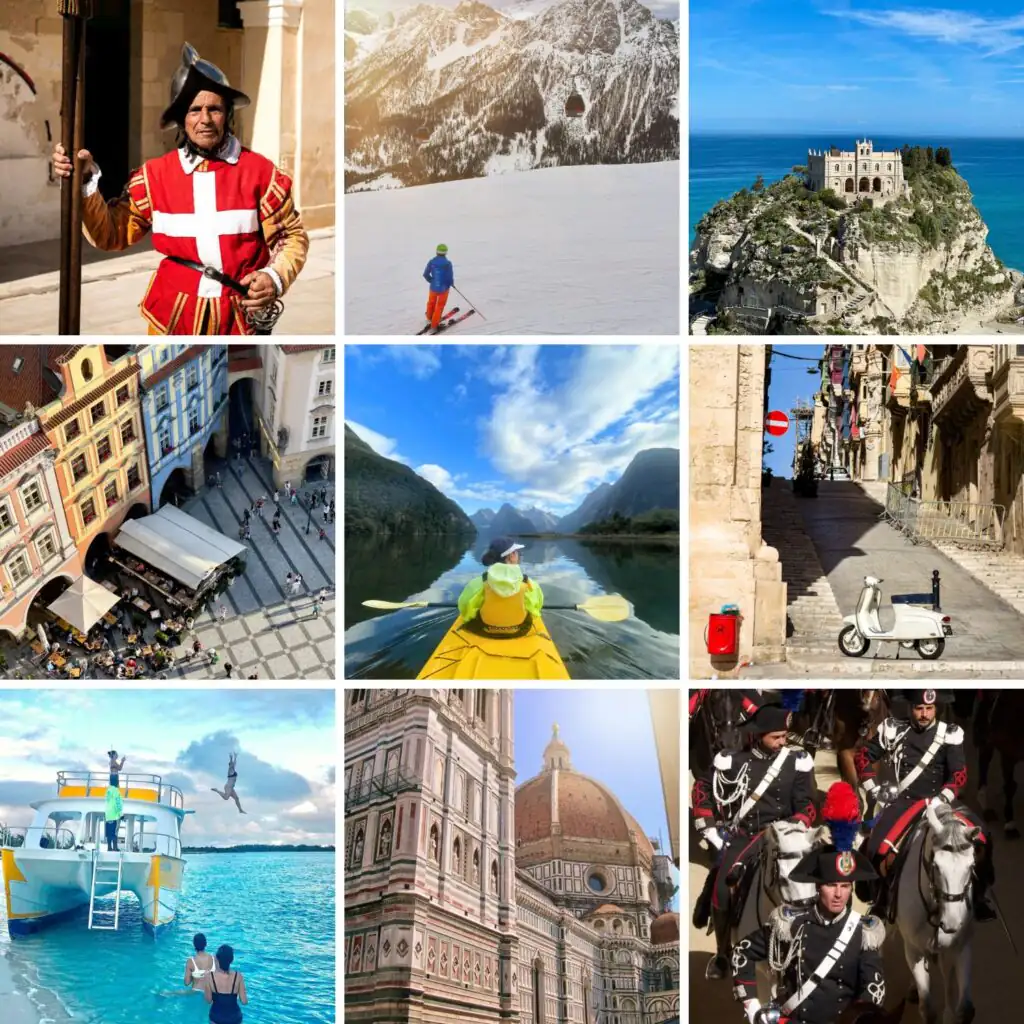
One person wants to explore museums and learn the history. Another wants to hike, kayak, or climb to the best viewpoint. Someone else wants to sample local food, meet residents, and experience the destination through its culture.
And someone may be perfectly content with a comfortable chair beside the pool and an uninterrupted afternoon with a book.
Travel Villa Guide uses Travel Type Matching™ to help groups recognize and accommodate four common travel styles.
Immersers want to understand a destination from the inside. They enjoy reading and researching the destination, and guided tours.
Adventurers feel most alive when they’re active. Hiking, biking, water sports, and physical challenges make their trips memorable.
Experiencers seek distinctive moments. A private cooking class, a special meal, a wine tasting, or a cultural encounter gives them something unusual to enjoy and remember.
Relaxers value rest, simplicity, and an unhurried pace. They appreciate quiet mornings, time by the pool, and the freedom to do very little.
Most groups include a mix of these styles.
Meaningful togetherness doesn’t require doing everything together.
The goal isn’t to make everyone follow the same itinerary. It’s to give people opportunities to enjoy what they love while creating shared moments that bring everyone together.
Some might visit a museum while others go hiking or relax at the villa. Later, all parties return for dinner, bringing new experiences and stories to share. Allowing everyone their space reduces friction and creates a more fulfilling trip for everyone.
4. Choose Accommodation That Makes Connection Easier
If the purpose of your trip is to spend time together, the place you stay should support that goal.
A hotel spreads a group across different rooms and floors. Getting everyone together for breakfast or dinner requires planning and coordination.
A private villa creates a shared home base.
People gather in the kitchen for coffee without scheduling it. Children play in the pool while adults talk nearby. Someone can retreat to a bedroom for a rest without becoming disconnected from the group.
Dinner can continue after the plates have been cleared. Conversations can stretch late into the evening. Everyone has room to gather and room to recharge.
This can be especially valuable when traveling with several generations, where people have different schedules, energy levels, and needs for privacy.
There can also be a financial benefit. For larger groups, renting a private villa can often deliver more space and value than booking multiple hotel rooms. Because hotels generally charge by the room while villas are priced by the property, the per person cost can be less even though you’re getting considerably more.
And the value isn’t just about the price. It’s also about having a place where the group can spend time together naturally.
5. Leave Room for the Story You Cannot Plan
An itinerary can include a cooking class, a museum visit, a wine tasting, or a guided excursion.
It cannot schedule the moment everyone will still be talking about years later.
During a multigenerational heritage trip to Sicily, Paul’s family visited Cammarata, his mother-in-law’s ancestral hometown.
Their concierge connected them with a local guide who knew the town’s mayor. When the family arrived, the mayor was waiting to welcome them.
He brought them to the town hall, walked with them through the village, and showed them where their ancestors had lived. He introduced them to local people who still recognized the family name. A newspaper photographer was there to document the visit.
For the younger members of the family, a distant piece of their history suddenly became real.
No one anticipated that experience when the trip was planned. The right local connections and enough flexibility simply gave it room to happen.
This is why local concierge support can be so valuable for a group trip. Knowledgeable people on the ground can help arrange experiences, coordinate transportation, and connect travelers with opportunities they might otherwise miss.
They can also handle practical details and resolve problems, allowing the person who organized the trip to spend more time enjoying it.
6. Measure the Return in Stories: The Five-Year Test
In financial planning, success is often measured by return on investment.
Paul applies a different measure to travel through what he calls the five-year test:
Will you still be talking about this trip five years from now?
If so, what will you remember?
It might not be the famous monument or the activity everyone said was unmissable.
It could be running through Rome with your children in the rain, stopping for gelato every few blocks.
It could be hearing taps at sunset in the American cemetery in Normandy.
Or it might be sitting in a crowded pub when the music suddenly stops, one person stands, and an unaccompanied voice fills the room.
We tend to remember the moments that make us feel something.
That feeling is what turns an experience into a memory. When the memory becomes a story your family continues to tell, the trip keeps returning value long after everyone comes home.
The five-year test is also a useful question to ask before booking an activity or choosing a destination. Will this experience help bring the group together? Does it reflect what the people traveling actually care about? Is it worth the time, money, and effort?
You don’t need every moment to be extraordinary. You simply want to create the conditions for experiences that matter.
Don’t Wait for the Perfect Time
It becomes harder to gather your favorite people as the years pass.
Children grow up. Parents get older. Friends move away. Calendars become more complicated.
The “perfect” time may never appear on its own.
If you’ve been discussing a family reunion, a milestone celebration, a heritage journey, or a trip with old friends, begin the conversation now.
You don’t need to have the destination or dates settled. Start by asking who should be there and why this gathering matters.
Trip details can be planned later. The first step is deciding that time together deserves a place in everyone’s lives.
Because the most meaningful return on a trip may not be what you see or where you go.
It may be the relationships you strengthen, the stories you create, and the memories your family carries forward.
These are the travel heirlooms worth creating.
Start Creating Your Own Travel Heirloom
Planning a family reunion, multigenerational vacation, milestone celebration, or long-awaited trip with friends?
Download The Gift of Time Together, Travel Villa Guide’s complimentary guide to creating more meaningful travel experiences with your favorite people.
You’ll discover three ways to make your time together more meaningful, with ideas for creating experiences that bring people closer.
For more ideas and inspiration, subscribe to The Together Letter, the newsletter about meaningful travel, shared experiences, and making time for the people who matter most.
And to hear Paul discuss travel heirlooms, Travel Type Matching™, and planning memorable group trips, listen to his conversation with Shannon Bednarova on the A Lady Well-Travelled podcast: “Investing in Memories with Friends, Family and Faraway Villas.”