Table of Contents
You can plan every detail of a once-in-a-lifetime family trip and still come home thinking, we barely connected.
The flights were booked and the dinners reserved. The itinerary held everything you were told you couldn’t miss. But somewhere between the tours and the transfers, no one had a chance to slow down. The organizer spent the week managing logistics. The teenagers were bored, and the grandparents were worn out. The only time everyone sat down together was a rushed dinner in a loud restaurant.
The problem usually isn’t the destination. It’s how the trip was designed.
Paul Partridge, founder of Travel Villa Guide, recently joined Dr. Leslie Davis on the Authentic Voice Leadership podcast to talk about exactly this. Paul started out in the high-pressure world of Madison Avenue advertising. Over more than 25 years, he has designed intentional travel experiences for groups around the world. The conversation was about rest, overwhelm and reclaiming what he calls “the gift of time together.”
His approach applies to group celebration travel, especially multigenerational vacations, family reunions, friends’ getaways, milestone birthdays and heritage journeys. Here are five takeaways from the conversation.
1. Avoid the “Backwards” Mistake Almost Everyone Makes
Most of us plan a trip the same way. Pick a place, book a hotel, then fill the days with a list of sights, as many as we can cram in. Paul says this is backward.
He suggests starting with three questions:
- Who is coming?
- Why are we gathering?
- How do we want this time to feel?
“The trips that people remember the most and cherish the most don’t start with the place,” Paul explained. “They start with the people.”
The answers change everything. A 50th anniversary trip isn’t a family reunion. A multigenerational vacation isn’t a friends’ getaway. A heritage journey tracing your family’s roots has a different purpose from getting everyone together after years apart.
Once you know your who and why, the destination can fit the purpose.
2. Plan for Different Travel Styles
Every group has a mix of people. One wants to explore every village and historic site. Another would happily spend the afternoon reading by the pool. Someone else wants a day of hiking, while a grandparent or young child needs a gentler pace.
That’s normal, and it’s easy to plan for once you expect it. Travel Villa Guide invented a simple system called Travel Type Matching™ to help groups recognize these differences before they turn into friction.
The goal isn’t to get everyone doing the same thing. Trying to put every person in every activity turns a celebration into an endurance test. Let people follow their own interests for part of the day, then bring them together for the moments that matter:
- Coffee in the morning
- A long lunch
- An afternoon by the pool
- Dinner around one table
- A glass of wine after the kids have gone to bed
It’s a cliché, but the quality of the time matters most: How to make the time you share feel natural rather than scheduled.
3. Give Yourself Permission to Be Bored
When his family talks about what everyone wants from a trip, Paul sometimes gives an unexpected answer: “I want to be bored.”
When we travel, we tend to swap one kind of stress for another, with reservations in place of emails and departure times in place of deadlines. Stepping out of your routine into new terrain acts as what Paul calls a pattern interrupt. It’s a signal to an overworked body that it’s safe to slow down, and there’s room for focused presence and genuine connection.
Choosing boredom doesn’t mean wasting the trip. It might look like:
- Lingering over breakfast without worrying about what comes next
- Sitting by the pool until someone feels like moving
- Wandering through a market without turning it into a track meet
This approach also leaves room for conversation. When no one is rushing toward the next scheduled activity, stories come out. Someone asks the question there was never time to ask at home. The empty spaces in an itinerary aren’t gaps to fill. They may be where the trip finally begins.
4. Leave Room for the Plot Twists
Ask a family about their best trip, and they’ll rarely mention the hyper-scheduled tour. They’ll tell you about something that went wrong in a funny way, or went right without any planning. Paul calls these the plot twists of travel, and his family has had plenty:
- St. Lucia: At a dinner, Paul unexpectedly volunteered to swallow fire, leaving his family half in horror, half in stitches.
- The Galapagos: A sea lion leapt clean over Paul’s wife while she was snorkeling. The people on the beach burst into applause.
- Greece: The family stayed at a private villa and got to know the chef, leading to an invitation to his family farm and an unforgettable morning.
None of these was on the itinerary. Years later, they’re the stories the family still talks about.
You can’t manufacture moments like these, but you can leave room for them to happen. Sometimes the best trips aren’t about seeing more. It’s about being available for what happens.
5. Choose a Place That Makes Togetherness Easier
The setting matters more for a group than for anyone traveling alone. This is why private villas suit family reunions and multigenerational vacations so well.
A hotel is built for individual guests. A villa is a home for your whole group. Instead of meeting in a lobby or hunting for a restaurant with a table big enough for everyone, you get shared spaces where connection happens on its own:
- A kitchen where everyone drifts in for morning coffee
- A dining table where meals become conversations instead of reservations
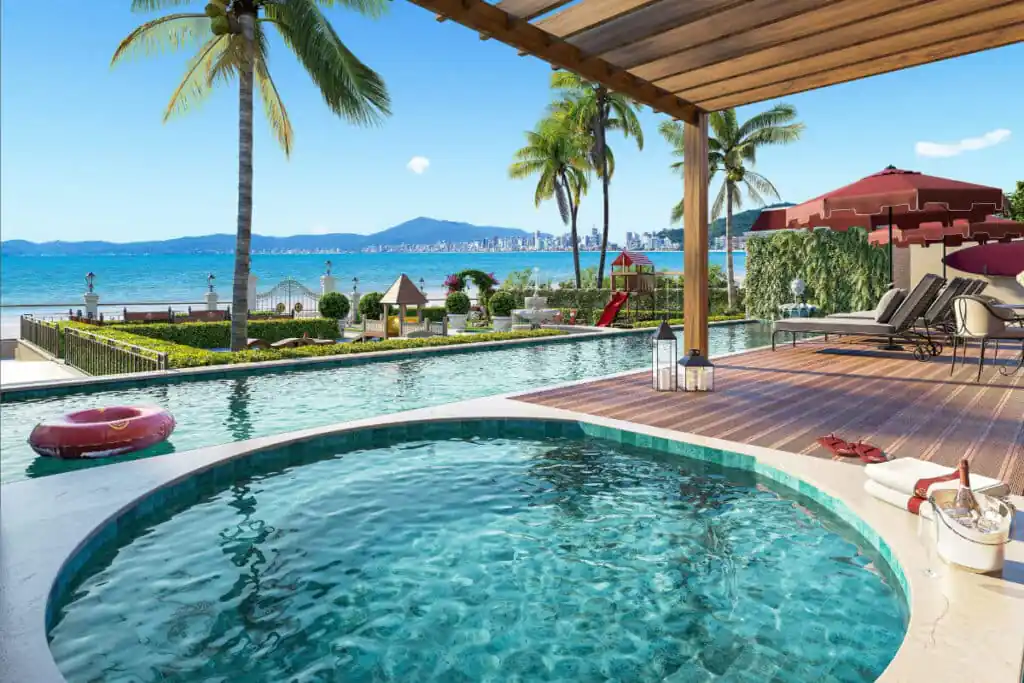
- A private pool where different generations can spend the afternoon together
- Indoor and outdoor spaces where people can gather, or step away
- Bedrooms that give everyone room to recharge
That last point matters. Privacy and togetherness go hand in hand. People are more willing to spend time together when they know they can retreat, and a good villa makes both easy.
For larger groups, a villa can also offer real value compared with booking several hotel rooms. Hotels charge by the room, while villas are priced by the property, so the math can look very different with several couples or multiple generations. But the value isn’t only about price. It’s what the group gets for it: more shared space, more privacy and more flexibility.
Why Local Support Matters on a Group Trip
Things rarely go exactly to plan when you’re coordinating a large group. A reservation changes, a driver runs late, or the weather affects an excursion. A small problem can become a big distraction.
That’s why Travel Villa Guide recommends villas that come with local concierge support. These are people on the ground who can help arrange experiences, coordinate transportation and handle the details that would otherwise land on the person who organized the trip. After all, that person should be at the dinner table, not on the phone arranging tomorrow’s transportation.
The Five-Year Test: How to Tell If a Trip Was Worth It
Accommodations, food and scenery all matter. But Paul suggests one more measure, the Five-Year Test:
What will you still be talking about five years from now?
Will it be the number of landmarks you visited, or the moment that had everyone laughing? The square footage of the villa, or the long evening around the table when no one wanted to leave? How many boxes you checked off the list, or how it felt to be together with nowhere else to be?
The trips that pass this test create what we think of as travel heirlooms: the stories, inside jokes, photographs and memories that people carry long after they return home.
They also pass the Five-Year Test, which asks: Are you still talking about the trip five years later? And if so, what are you talking about?
What surprised you? What impressed you? What stayed with you? And how did it make you feel?
Frequently Asked Questions
How do you plan a multigenerational vacation?
Start with the people, not the place. Decide who is coming, why you’re gathering and how you want the trip to feel. Then choose a setting with room for shared time and private space, and build in flexibility for different ages and energy levels.
How do you keep everyone happy on a family reunion trip?
Don’t require everyone to do everything together. Offer a few shared anchors, such as a morning coffee, a group dinner or a pool afternoon. Leave the rest open so each person can enjoy the trip their own way.
How much should you schedule on a group vacation?
Less than you think. Overscheduling turns a vacation into a to-do list. Open time makes room for conversation, rest and the spontaneous moments people remember most.
Why choose a private villa for a family gathering?
A villa gives a group a shared home base with common spaces for meals and conversation, plus private bedrooms and quiet corners. It also removes many of the logistics of coordinating several hotel rooms.
Listen to the Full Conversation
Hear Paul’s complete conversation with Dr. Leslie Davis in “Rhythms of Rest: Moving from Business Overwhelm to Intentional Connection” on the Authentic Voice Leadership podcast.
Plan the Trip Around the People Who Matter Most
Most trips are planned around the place. The best ones are planned around the people.
If you’re imagining a multi-generational trip, family reunion, milestone celebration, heritage journey or long-awaited trip with friends, start with our complimentary guide, The Gift of Time Together. It shares three simple steps for designing an experience around the people who matter most.
When you’re ready to find the right setting, explore Travel Villa Guide for thoughtfully selected private villas and local support for group travel and celebrations.